Monday, October 1, 2012

2012-2013 Interns and Trainees off to a Great Start!

True to RAMS commitment to fostering the next generation of culturally competent clinicians, each year the agency offers a variety of internship placements.  This year, RAMS has about 30 new interns and trainees possessing a vast range of skills and knowledge, languages spoken, educational backgrounds, and disciplines who are serving the client community in seven of RAMS programs – Asian Family Institute; Adult/Older Adult Outpatient Services Clinic; Broderick Street Adult Residential Facility; Child, Youth & Family Outpatient Services Clinic; Fu Yau Project; PAES Counseling & Pre-Vocational Services; and Wellness Centers Program.  The interns and trainees have undergone an orientation and training process in September with seminars ranging from working with children & families and adult/older adults, to confidentiality & privacy policies, mandatory reporting requirements, response to crisis and suicide intervention, cultural humility and competency principles, engagement, and strategies…and so much more!  Now that the majority of “orienting” is done, RAMS is looking towards the next phase of applying theory and clinical knowledge into practice, fostering professional growth and development through supervision and ongoing trainings and seminars, and offering enriching experiences in community mental health settings.

RAMS aims to recruit a diverse group and, for academic year 2012/13, the agency did just that!  The intern and trainee group represents graduate programs of over 10 schools – California Institute of Integral Studies; Alliant International University/California School of Professional Psychology; Georgia State University; San Francisco State University; Smith College; University of California, San Francisco; and The Wright Institute, just to name a few.  And, to reflect the diverse languages of the client community, over 15 languages can be spoken by the group including Cantonese, Hindi, Korean, Mandarin, Malay, Mongolian, Russian, Spanish, and many more.  The interns and trainees also come to RAMS in different stages of their educational training with majority currently in their masters programs while others are pre-doctoral interns (RAMS National Asian American Psychology Training Center has been continuously accredited by the American Psychological Association since 1980), post-doctoral fellows, and post-masters interns in various healthcare disciplines – Psychology; Marriage & Family Therapy; Nursing; and Social Work.  RAMS even has different training focuses such as clinical and research.

RAMS actively retains high quality licensed clinicians to provide clinical supervision to the interns and trainees (many who are former RAMS interns and/or trainees themselves).  The agency is truly privileged to be able to be part of the group’s journey through the helping profession – for over 35 years, the agency has had this honor for many in the field and looks forward to continuing this tradition.

Pre-Doctoral Interns, Interns, and Practicum Trainees at RAMS
There are interns and trainees at almost every RAMS program, and although we are not able to include everyone's pictures, we are delighted to have ALL of them here contributing their skills and talents to RAMS! 

Friday, September 28, 2012

Stereotype Threat: How it affects us and what we can do

RAMS is honored to have distinguished speaker Claude Steele, PhD, as our featured presenter for the 7th Annual Evelyn Lee Diversity and Cultural Competency Training on October 11.

This seminar will focus on the theory of stereotype threat, designating a common process through which people from different groups, being threatened by different stereotypes, can have different experiences in the same situation. It will illustrate its application in understanding group differences in performance ranging from the intellectual to the athletic, in a variety of settings such as the workplace and academia. The psychological experience of the individual and, particularly, on the experience of threats to the self and the consequences of those threats will also be discussed along with the concepts of self-image threat, self-affirmation, and its role in self-regulation, the academic under-achievement of minority students, and the role of alcohol and drug use in self-regulation processes and social behavior. Furthermore, the seminar will reveal interventions and strategies, from a community service provider perspective.

When: Thursday, October 11.  9:00am - 12:00pm (Registration 8:30am)
Where: Balboa Theater, 3630 Balboa Street, San Francisco (Next door to RAMS)

Dr. Steele is a renowned social psychologist who is currently the I. James Quillen Dean for the School of Education at Stanford University. Previously, he served as the 21st Provost of Columbia University, as well as a professor of psychology. He is best known for his work on stereotype threat and its application to minority student academic performance. His earlier research focused on the self (e.g. self-image, self-affirmation) as well as the role of self-regulation in addictive behaviors. Dr. Steele has also published articles in numerous scholarly journals and his recent book, Whistling Vivaldi: And Other Clues to How Stereotypes Affect Us and What We Can Do, was published in 2010.


Monday, September 17, 2012

Trauma/Grief and Loss Counseling Services through the San Francisco high school-based Wellness Centers

RAMS, Inc. has had over a decade of partnership with the San Francisco Wellness Initiative, a collaboration between the San Francisco Unified School District (SFUSD), SF Department of Public Health / Community Behavioral Health Services (SFDPH-CBHS), and Department of Children Youth and Families (DCYF). The Wellness Initiative has established Wellness Centers in, currently, 16 of the public high schools in San Francisco. The Wellness Centers provide free, on-site, confidential health services to students including behavioral health counseling, nursing services, support and empowerment groups, and connections to health resources in the community. RAMS, specifically, is the core behavioral health services provider  with on-site counselors/therapists, clinical case managers, and an intern training program that recruits graduate students annually, to provide support  to over 1,500 students a year.  Over the course of our work, they have experienced a high volume of students regularly affected by frequent acts of community violence that occur several times (sometimes more) a year.  Each violent act simultaneously affects bands of students at several high schools at once and the volume of the problem outweighs the capacity of the Wellness Centers’ staff.  In response to this need, the Trauma/Grief & Loss Counselor (TGL) position was proposed by RAMS and funded through the Mental Health Services Act (MHSA) / SFDPH-CBHS in 2009.  The TGL Counselor is integrated, and is available to all 16  Wellness Centers and provides immediate response to and intervenes in schools when students or faculty are affected by school-wide crises, such as neighborhood violence or deaths of students and teachers.  The TGL Counselor provides debriefing, de-escalation, training, and short and long term group therapy. The TGL Counselor possesses a Master’s degree (mental health field), is bilingual & bicultural, and has clinical expertise in working with adolescents and trauma/grief & loss issues. 

Students are recruited for Trauma/Grief & Loss services in several ways. Following an incident of community violence or other tragedy (i.e. suicide or death of teachers) there is subsequent debriefing and containment at a school(s), after which students may directly agree to on-going group support.  The Wellness Center staff also may identify students who have been referred to them by teachers or academic counselors; and have exhibited symptoms of trauma; or have admitted some experience with being victims or witness to violence.  Staff will request TGL group services for these students. TGL services average about six groups per semester.

The curriculum for the Trauma/Grief and Loss groups is a combination of Trauma-Focused Cognitive Behavioral Therapy (Cohen, Mannarino, & Deblinger, 2006) and the Seeking Safety models (Najavits, 2007).  Both models are present-focused and components-based and aim to help group members learn new skills to cope with and manage symptoms of trauma.  Both have evidence that support their efficacy.

For the 2011-12 school year, the TGL Counselor provided services to 90 students and facilitated 11 groups at nine school sites.  The participant demographics were: 51% Latino, 25% African American, with the remaining being Filipino, Multi-racial, Caucasian and Other.  Approximately 70% of the youth had recently experienced the death of a family member or someone close to them while others had issues relating to immigration or other trauma (i.e. suicide or domestic violence).   

To evaluate the effectiveness of the services, students are administered a pre- and post-test during their participation,  based on the Child PTSD Symptom Scale (CPSS) (Foa, et al.,2001) which measures their level of PTSD symptomology on a 1- 51 scale.  Students rating over 15 are considered to be above the clinical PTSD range.  The Wellness Initiative’s research partner, ETR (Evaluation, Training, Research) Associates collects the test data and reports annually on the outcomes. Consistently, the results have been promising.  In the 2011-12 group evaluation survey, 100% of the participants reported a decrease in their PTSD symptoms with an average 16-point drop.  Furthermore, 92% of group participants, at intake, were above the PTSD range; at the end of the group, only 44% of these students measured above the PTSD range.   

It is these hopeful outcomes that support our commitment to serving San Francisco’s youth in the Wellness Centers.  RAMS continues to solicit feedback from students about services to identify and further strengthen culturally competent, consumer-driven programming and how to effectively support youth experiencing trauma symptoms.
Photo credit - by FotoRita on Flickr

Thursday, July 12, 2012

A Story from Judy Tseng

Following Mr. Ramey Ko and Ms. Bonnie Youn courageously sharing their stories, Ms. Judy Tseng shares her personal story to inspire others and encourage talking to someone & seeking help when needed. Thank you for making a positive difference!

Saturday, June 30, 2012

Fu Yau Project Summer 2012 Newsletter

Check out the latest Fu Yau Times, a semi-annual newsletter with great articles and tips on parenting and resources for the community. Check it out by clicking HERE.

About the Fu Yau Project:
The Fu Yau Project is one of the many Child, Youth & Family Services offered at RAMS. It is a collaboration of RAMS and Chinatown Child Development Center (CCDC) and is located at 720 Sacramento Street, in San Francisco's Chinatown district. This innovative program provides prevention and early intervention mental health services to the childcare community that cares for children, ages 0-5 years old. Services includes the following: On-Site Program and Child Observation; Clinical Consultation with childcare staff and families; On-Site Intervention with individual and groups of children; Parenting Classes and Support Groups; and In-Service Training for the childcare staff relating to child development and mental health related issues. The Fu Yau Project staff includes child psychiatrists, licensed and license-tracked clinical psychologists, clinical social workers, and marriage and family therapists, all of whom reflect the unique language skills and cultural competence needed to provide services for the children, families, and teaching staff of the childcare programs.

Through the Fu Yau Project, RAMS currently provides services at more than 43 childcare centers, 8 family childcare providers, 5 family resource centers, and one after school site, which are located in over nine San Francisco neighborhoods.

Monday, June 18, 2012

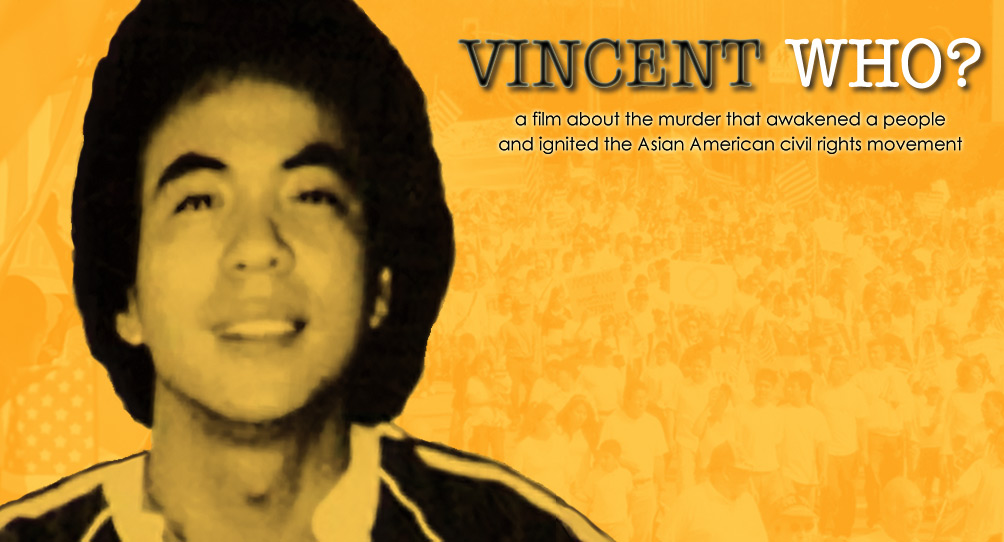
30 Years After Vincent Chin

In 1982, Vincent Chin was the victim of a hate crime murder in Detroit. Thirty years later, Asian Americans and Pacific Islanders continue to face discrimination and bullying. In light of recent tragedies like the extreme hazing and subsequent death of Pvt. Danny Chen and the continuing effects of 9/11, what can Asian Americans and Pacific Islanders do to stand up against racism and discrimination?

The death of Vincent Chin's death is of great historical significance for our community, and marked a turning point for API involvement and awareness of social justice and equality.  RAMS is proud to be a co-sponsor for this event.  Join us on June 23rd for a live broadcast of a national discussion on hate crimes & bullying, followed by a lively local conversation and Q&A with leaders of local civil rights organizations, moderated by R.J. Lozada from local radio show APEX Express.

Here's the Facebook event page!

What: Vincent Chin 30: Standing Up Then and Now, a Bay Area Conversation
When: June 23rd, 2012 10:45am - 3:00pm
Where: 9th Street Independent Film Center Theater 145 9th Street San Francisco, CA 94103

Attendees can buy tickets HERE.

SCHEDULE
  • 10:45am - DOORS OPEN
  • 11:15am - 12:00pm BROADCAST of live Google Hangout "Vincent Chin 30: Standing Up Then and Now" from speakers across the US including Moderator Phil Yu (Angry Asian Man), Congresswoman Judy Chu (LA) - and speaking on location in San Francisco, Zahra Billoo (CAIR - SF, Executive Director)
  • 12:00pm - 1:00pm FILM SCREENING: "Vincent Who?". Food and light refreshments available in the lobby.
  • 1:00pm - 3:00pm LIVE DISCUSSION and Q&A Featuring Bay Area Civil Rights Leaders on Hate Crimes and Bullying Moderated by R.J. Lozada, contributor to APEX Express, a weekly magazine-style radio show on KPFA featuring the voices and stories of Asians and Pacific Islanders from all corners of our community. Speakers: Vincent Pan (Chinese for Affirmative Action, Executive Director), Ling Woo Liu (Korematsu Institute, Executive Director), Zahra Billoo (Council on American-Islamic Relations - SFBA, Executive Director), Angela Chan (Asian Law Caucus, Staff Attorney in Criminal Justice Reform Program)

Presented by
Asian Pacific Americans for Progress (SF Bay)
Center for Asian American Media

Co-sponsors (current as of 6/18/12): Chinese for Affirmative Action (CAA) Asian Law Caucus (ALC) Korematsu Institute Council on American-Islamic Relations SF (CAIR-SFBA) APEX Express KPFA 94.1 on Thursdays from 7-8pm Chinatown Community Development Center (CCDC) Chinese Progressive Association (CPA) South Asian Bar Association of Northern California (SABA - NC) Asian Pacific American Bar Association of Silicon Valley (APABA-SV) San Francisco La Raza Lawyers Association (SFLRLA) Sikh American Legal Defense and Education Fund (SALDEF) Richmond Area Multi Services (RAMS)

Tickets will be sold for the duration of the event, depending on seating or standing room capacity. There will be a live stream of the event and a viewing area from the lobby. Proceeds will help meet the costs of production for the event.

Friday, June 1, 2012

Participating in the International Study of DSM Cultural Formulation Interview

The Diagnostic and Statistical Manual of Mental Disorders (DSM), the handbook written by the American Psychiatric Association (APA), and used by health care professionals as an authoritative guide to the diagnosis of mental disorders, is now in the process of finalizing its 5th addition. RAMS, Inc. is proud to serve as the San Francisco site for the DSM-5 Cultural Formulation Field Trial, studying the newly proposed Cultural Formulation Interview (CFI). This key addition to the Manual has been created to help clinicians more effectively assess cultural aspects of psychiatric diagnosis. In collaboration with UC Davis, RAMS is one of about a dozen sites in this international DSM-5 Cultural Formulation field trial study being led by the Center of Excellence for Cultural Competence at the New York State Psychiatric Institute with support from the American Psychiatric Association.

In the CFI, culture refers to the values, orientations, assumptions, and perspectives that may be influenced by an individual's membership in a social group or by aspects of an individual's background, such as ethnicity, class, race, language, and religion. The Cultural Formulation Interview focuses on assessing these cultural aspects of the patient's presentation and treatment expectations in order to make clinical care more culturally appropriate. Thus, unlike the standard patient history assessment, whose agenda of topics and direction is usually set by the clinician, the CFI attempts to address problems from the patient's standpoint. RAMS is excited to have been the site utilizing the Chinese language translated version of the CFI in order to better assess its content, clarity, and effectiveness within a particular ethnic and linguistic group.

From the Press Release from American Psychiatric Association: “As with every stage in this thorough development process, DSM-5 is benefiting from a depth of research, expertise and diverse opinion that will ultimately strengthen the final document," noted David J. Kupfer, M.D., chair of the DSM-5 Task Force. Feedback about the proposed changes, diagnostic criteria, and updates can be submitted through www.DSM5.org, which will be available until the comment period ends June 15. After that, the site will remain viewable but will be closed to comments as the Work Groups and Task Force complete revisions and submit criteria for evaluation by the Scientific Review Committee and the Clinical and Public Health Committee. The Task Force will then make final recommendations to the APA Board of Trustees. The final version of DSM-5 is expected to go before the Board of Trustees in December 2012. A more detailed update on the development and list of changes made to draft proposals since July 2011 can be found on www.DSM5.org.